
Environmental issues seem very far away for most Americans. There are clips in commercials of polar bears struggling to stay afloat in iceless, murky water, tropical rainforests being slaughtered at the trunks, and oil spills smothering aquatic animals. While these horrific ordeals seem almost movie-like to those not experiencing them, there are problems hitting much closer to home that can be overlooked. In the case of Cannon Falls and many other cities in the Midwest, these problems are hitting schools and communities in the form of emerald ash borers.
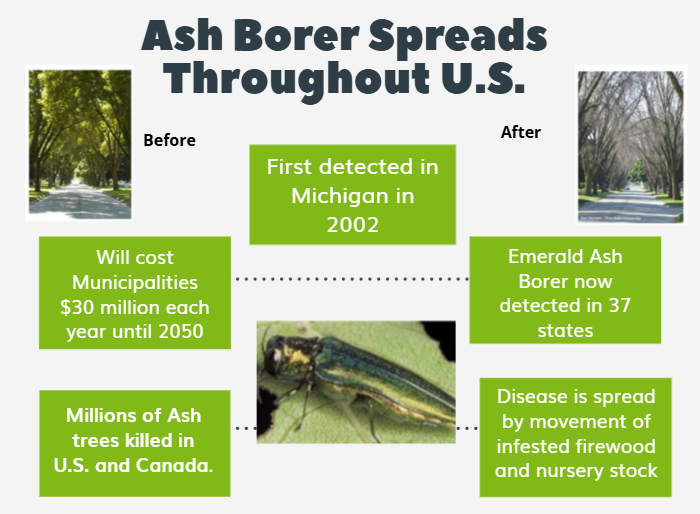
The emerald ash borer (EAB) is an insect not native to the United States, otherwise known as an invasive species. The United States Animal and Plant Health Inspection Service describes how EAB destroys native ash trees; EAB lay eggs in the tree, where the later hatched larvae will feed off of the tree, thus killing it. Invasive species, including the EAB, can be found in nearly all areas of the world, and have a major impact on the success of ecosystems. Many are depicted as disgusting, evil organisms, while others have a beautiful yet illusive description. No matter the appearance, invasive species have the ability to “thrive in areas where they don’t naturally live” according to the U.S. Fish and Wildlife Service’s report on invasive species. They effectively dismantle existing ecosystems in certain regions and destroy habitats.
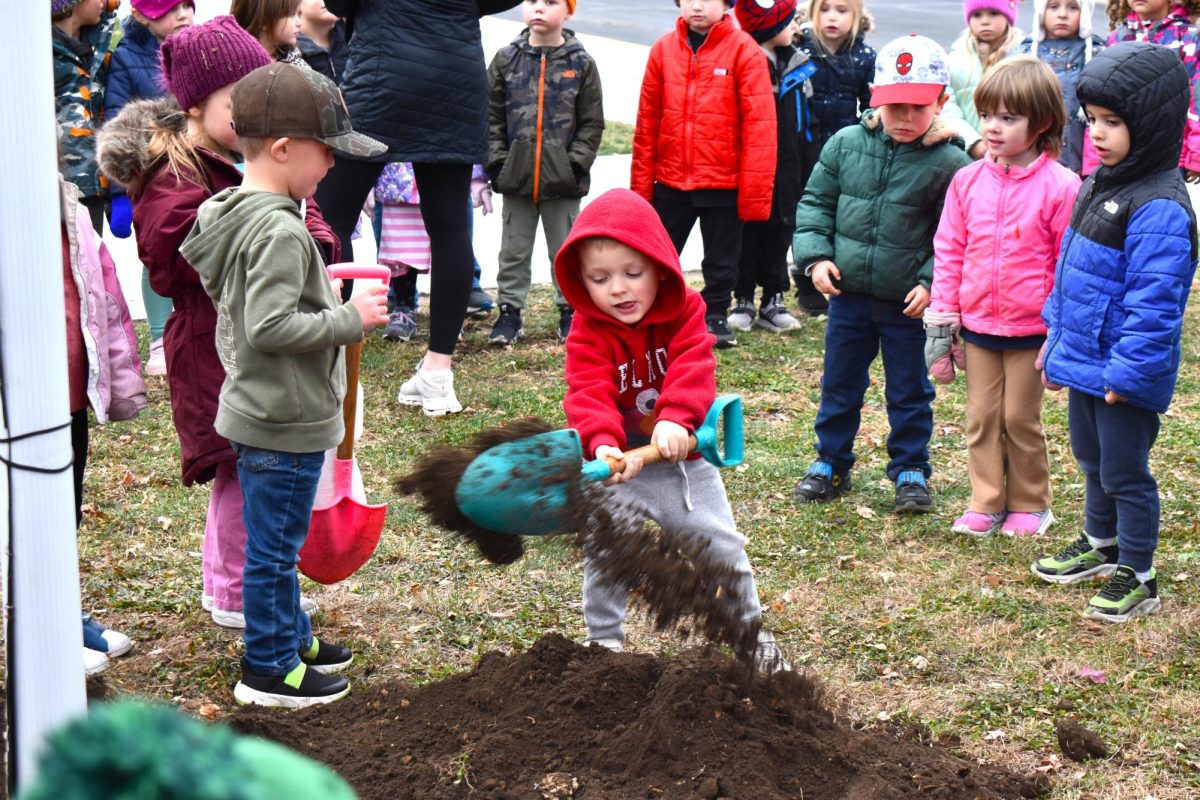
EAB are invasive to North America and destroy native ash trees; this heavily impacts ash tree populations negatively, causing them to decline exponentially. Cannon Falls ash trees are not immune to this epidemic and are victims of the EAB invasion. With this in mind, it was recently necessary to remove the dead ash trees in front of the Cannon Falls Schools, which had been ruined by EAB. Therefore, on November 17, the school focused on inspiring students by inviting each grade to plant a tree in place of a removed one.
Stephen Johnson is the lead facility services manager at Cannon Falls Middle/High School, and he played a significant role in the process of replacing the dead ash trees. “When I started the job last year, I had lots of decisions to make that would impact our community and kids here in our district,” he explained.
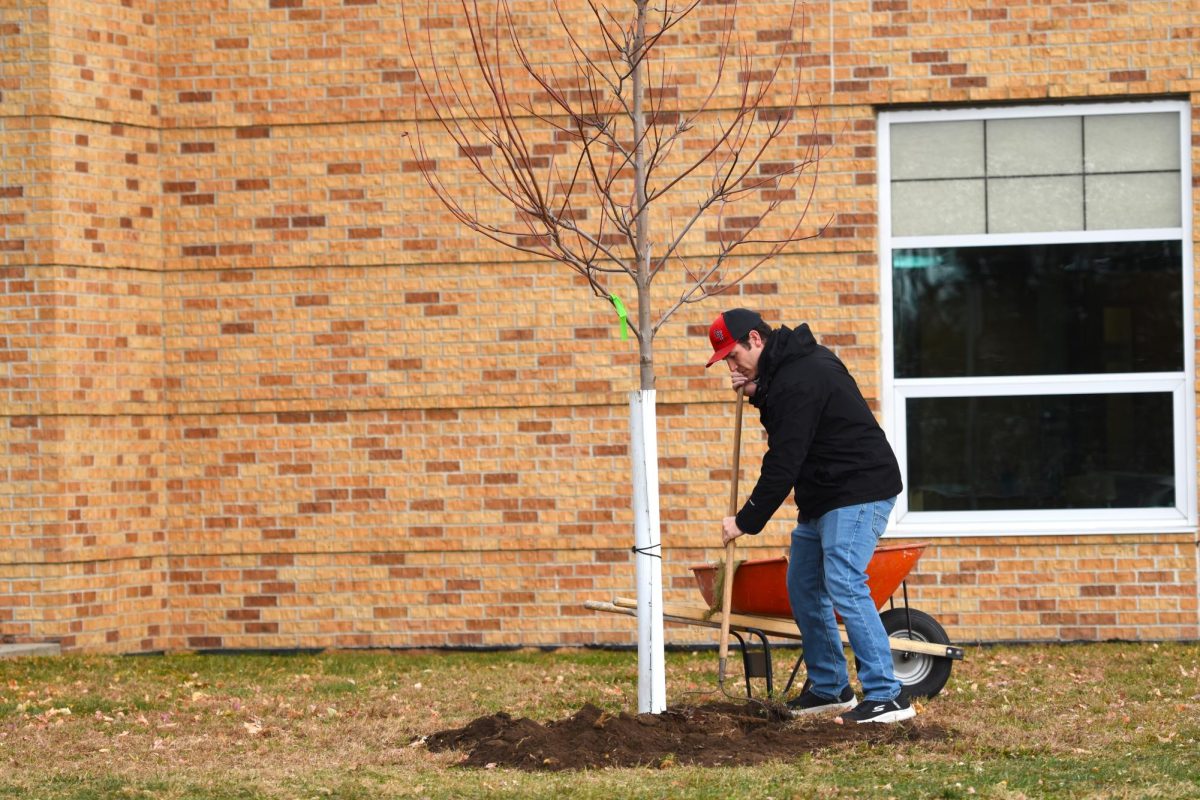
One of his most critical jobs was the removal of dead trees that had been impacted by EAB. Johnson expressed how important the replacement of these trees was, and how it would impact the students. “I really wanted to get the students involved because they are our future, just like the trees. I felt that if the kids planted a tree, it would get them rooted in our district and community,” he said.
Because Cannon Falls is such a small town, there is very little opportunity for projects that impact the environment like this one, especially for the school. The hope is that the students who took part in the process will carry that with them, inspiring them to carry out deeds that will benefit their environment and community in the future.
Matt Montgomery is the mayor of Cannon Falls and worked on the EAB problem in the community. “Our Public Works Department is working very hard to deal with the continuous problem of the emerald ash borer,” he explained. “We have a team of great employees but none of them are specifically trained as an arborist.”
Because Cannon Falls is such a small town, it is difficult to complete the removal of these trees, as well as the replenishing of the natural plant life. Montgomery also stated that in a typical year, the department cuts down around a dozen trees in the city of Cannon Falls. This year, “they had to cut down more than 100.” This number illustrates the extent of the EAB issue.
There are over 6,500 non-native species in the United States alone, according to the National Invasive Species Information Center. While these new species will have factors that hamper their existence, they can often thrive with a lack of normal predators or environmental conditions that control their population in their usual habitat; the same can not always be said for native species that are impacted by these invasive organisms. They are choked out by their new neighbors, who do not need to recognize the established environmental structures. As a result, these new species take over ecosystems, destroy their competitors and decimate the populations that they consume.
EAB originated in eastern Asia, as reported by the Minnesota Department of Natural Resources (DNR) and have found a new home in North America. Because they kill ash trees at a rapid rate, they have an extremely detrimental effect on ash tree populations, especially in Minnesota. Amanda Thompson is the high school biology teacher at the Cannon Falls School District and is also the Environmental Club advisor. Regarding non-native species in the Cannon Falls community, she states that there have been “large impacts in our local forests from buckthorn invasion and the spread of emerald ash borer.”
This includes the school forest and the trees in front of and around Cannon Falls School District buildings, which students see daily. She also mentioned how the dissipation of ash trees negatively affects both large areas of forests and in the city setting. “Ash are often mixed within our forests rather than being large tracts of trees, but their loss is still noticeable,” she explained. “The impacts can be even more obvious in the urban landscape as ash has been a common tree to plant along streets in many cities.”
[/video]
Rachael Dube is a Forest Health Specialist from the DNR, and provided some comprehension on the EAB problem in Minnesota through direct communication with the Lantern. She explained that lowering the effects of the EAB is difficult to accomplish: “Unfortunately, many of our municipalities in Minnesota have a high number of ash trees. Removing trees and replanting is expensive, and insecticide use will require a permanent investment.”
Dube went on to state that in rural or heavily wooded areas, it gets even harder. Forests that have high populations of ash trees will lose large amounts of tree cover as a result of the EAB invasions, which will limit the survival of species that rely on that shade, as well as the trees themselves. However, there are extremely limited methods to reduce the effects of the EAB. “We have to prioritize areas where we have a higher likelihood of success, and many forests will be permanently altered by EAB,” Dube stated. This unfortunate fact is disheartening, but with the help of students across the nation, the impacts of EAB can be mitigated to provide a better future.
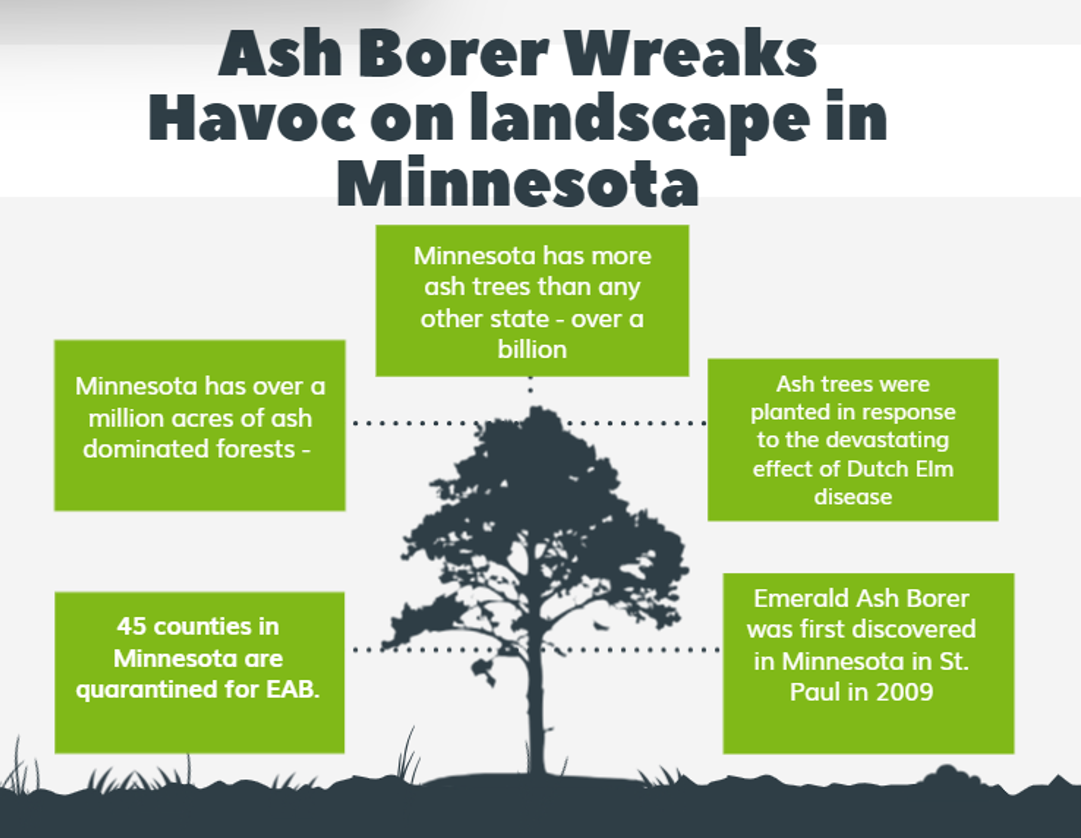
The clearing of these trees is disheartening for the future of ash tree populations, as well as for the overall climate crisis. While a few trees dying in one area doesn’t seem like a great amount, it is important to remember the vast amount of area this issue covers. Dube clarified that “Minnesota has the most ash trees of any state in the country – almost one billion ash trees in our cities and forests.”
If the proper steps are not taken to combat the EAB issue, Dube reported that Minnesota could lose 99% of its ash trees; this would have an astronomical negative impact on Minnesota’s climate. The World Wildlife Fund published “Deforestation and Forest Degradation,” which described potential issues that arise from the loss of trees. Reduced habitats for wild animals would lead to decreased biodiversity in affected areas, and trees play a crucial role in the diminution of the greenhouse gas issue.
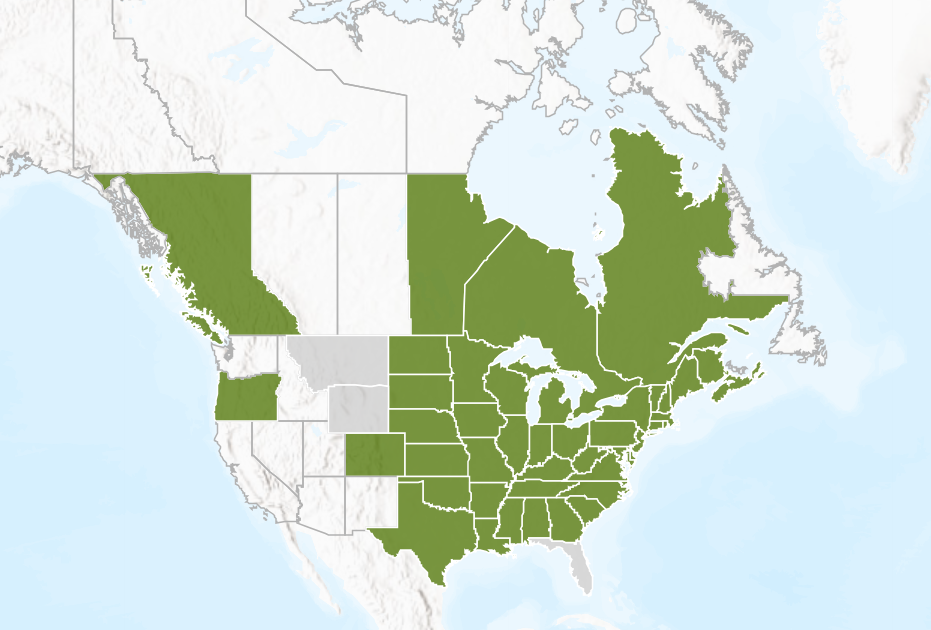
Cannon Falls is not the only community that struggles with the EAB issue; this problem is presently impacting a multitude of communities across the country, especially in the Midwest and eastern states. This graphic is displayed by the United States Animal and Plant Health Inspection Service map of the EAB infestation worldwide. Allowing young people to get involved in the preservation of their environment is crucial because it is their future. It is vital for students to understand the significance of caring for the environment in more ways than one, and this tree planting project was a remarkable method to teach this. Without regulation and recognition, invasive species will continue to grow in areas they are not indigenous to. Dube finished her comments by expressing “It is my hope that young people will take this issue more seriously than past generations – the future of our forests relies on it.”